
A banner tied to Lovelock’s early ranching history has been restored and reframed at the Marzen House Museum, preserving an artifact that had deteriorated after decades on display.
The banner, associated with Colonel Joseph Marzen and the Humboldt Stock Farm, has long hung inside the museum but recently received professional restoration and framing funded through community donations to the Friends of the Marzen House.
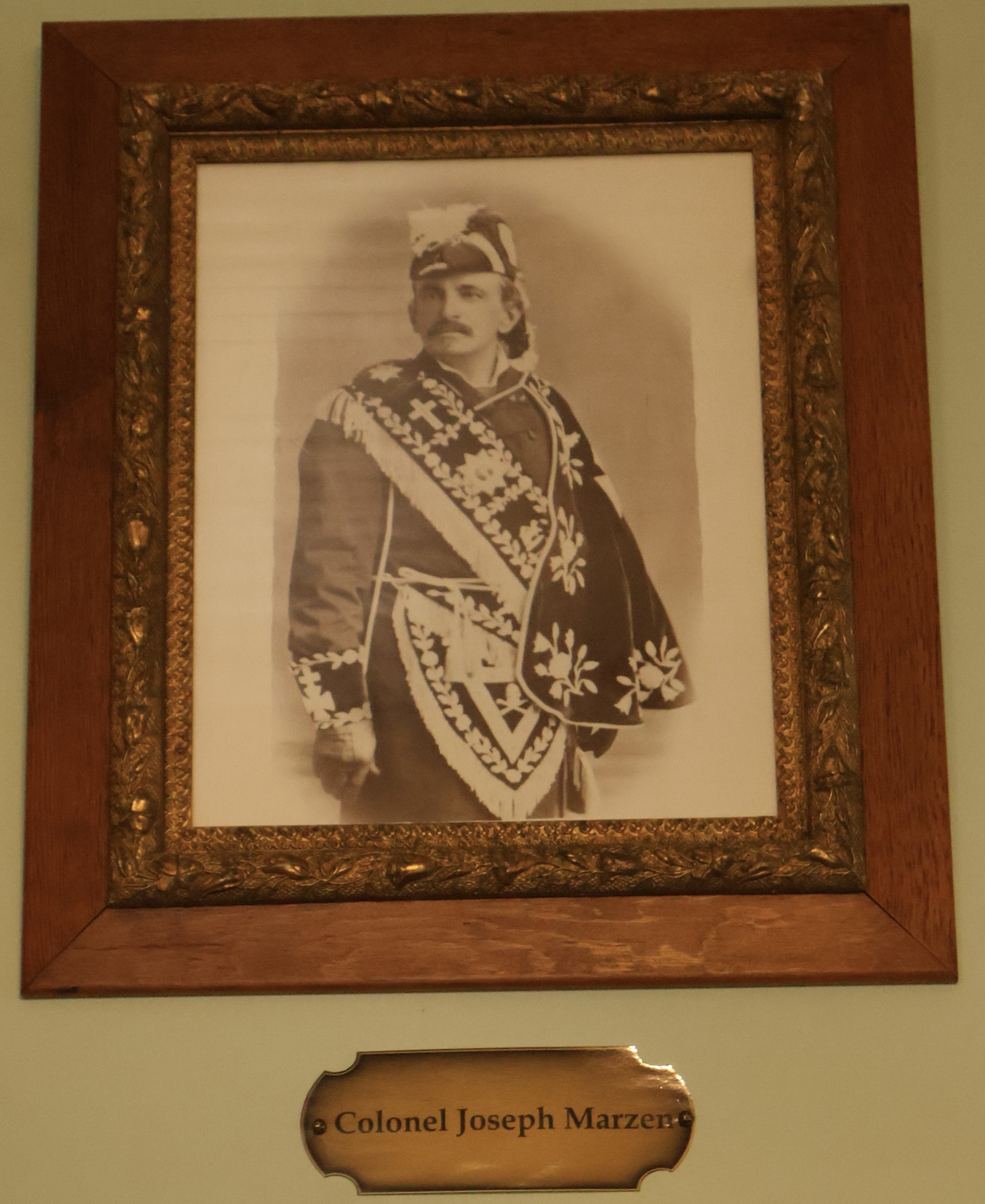
Joseph Marzen emigrated from Germany to the United States in 1846. He settled in Nevada in 1863 and later purchased land in the Big Meadows area south of Lovelock, where he established a cattle ranch. The ranch house he built is now the Marzen House Museum.
According to museum staff, the banner dates back to the early 1900s and is connected to Marzen’s cattle operations at Big Meadows Ranch, now owned by Walter and Coni Jo Brinkerhoff.
While the banner has been displayed at the museum for many years, its original donor and exact arrival date remain unknown.
Over time, the banner began to show signs of wear.
“It had been hanging there for years without support,” said Jack Hursh, a member of the Friends of the Marzen House.
“Any material that hangs unsupported will eventually deteriorate. Gravity literally starts to pull the threads apart.”
Museum staff noticed that the textile was developing runs and signs of weakening in the fibers. Exposure to light over many years also contributed to the deterioration.
Recognizing the need to preserve the artifact, members of the Friends of the Marzen House began exploring options to stabilize and protect the banner.
Hursh, Frank Fisk and Penny Balinger formed the Friends of the Marzen House Museum about a year and a half ago. The group accepts private donations and directs those funds toward preservation projects at the museum.
Through a series of small donations collected over time, the group raised enough funding to move forward with the restoration and framing work.
They took the banner to The Frame Shop in Reno, where professionals experienced in textile preservation evaluated the piece and recommended a method that would both stabilize the material and protect it long term.
The restoration included detailed stitching to stabilize weakened areas and prevent further tearing. The textile was then secured to a supportive backing to eliminate stress caused by gravity.
“They did a lot of fine stitching where the threads had begun to separate,” Hursh said. “That work helped stop the damage from continuing.”
In addition to providing structural support, the new frame places the banner behind protective materials that help limit future deterioration from light exposure. The framing design uses colors that highlight the banner’s lettering, which museum records indicate was created using gold-colored materials.
Hursh said the investment in professional framing was significant but necessary.
“Any kind of framing done well costs money,” he said. “But this was a really good investment because it means this piece will be preserved for many years.”
Before the restoration, the banner had been suspended from a hook using a rod and chain. Although it remained visible to visitors, that method allowed gravity to strain the fabric.
Now fully mounted within its frame, the banner is once again displayed prominently inside the museum, where it is among the first items visitors see as they enter the main building.
Museum volunteers noted that preserving historic textiles presents unique challenges because materials naturally weaken with age. Without proper support, even well-preserved items can eventually fail under their own weight.
Hursh said the project reflects the mission of the Friends of the Marzen House to ensure historically significant materials remain available for future generations.
“It hung there for years, and we could see it was deteriorating,” he said. “This gave us a way to preserve it and keep it part of the museum.”
Although details about the banner’s original use remain uncertain, volunteers believe it may have once been used as part of agricultural displays promoting Marzen’s cattle operations, possibly at fairs or exhibitions.
For now, museum leaders say the banner’s successful preservation demonstrates what can be accomplished through collaboration and community support.
With the restoration complete, the historic banner is expected to remain a prominent and protected feature of the Marzen House Museum for years to come.







Comment
Comments