
Long before radar, GPS, or glowing runways, pilots flying America’s first transcontinental airmail routes navigated by something far simpler, arrows poured into the ground.
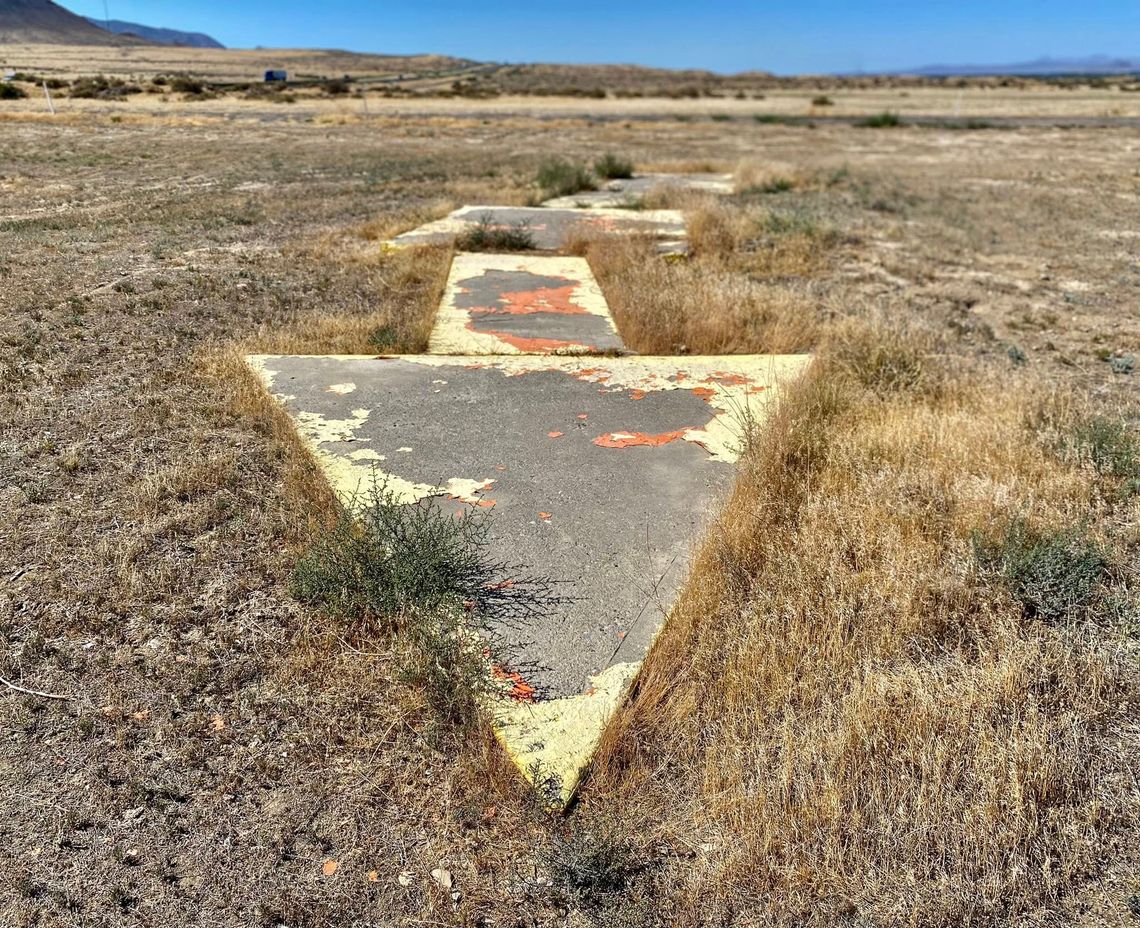
One of those arrows still lies quietly in the desert between Lovelock and Winnemucca.
The 57-foot concrete Transcontinental Airmail Navigational Arrow No. 27, located near Coal Canyon outside Oreana, is a surviving remnant of the San Francisco–Salt Lake City airmail route used during the 1920s and early 1930s. It once served as a literal guidepost in the sky, pointing pilots toward the next beacon as they crossed Nevada’s wide-open basins and mountain passes.
During the early years of aviation, flying after dark or in poor weather was perilous. To keep the mail moving, the federal government built a chain of concrete arrows, typically 50 to 70 feet long, spaced roughly 10 to 15 miles apart. Each arrow pointed toward the next stop, often paired with a steel tower topped by a rotating beacon that could be seen from miles away at night.
Nevada, with its vast distances, sparse population, and relatively flat terrain, became a critical corridor in the nation’s first coast-to-coast air mail system. Pilots relied on landmarks like Arrow No. 27 to stay oriented as they carried letters, newspapers, and contracts that tied the country together faster than trains ever could.
By the early 1930s, improvements in aircraft technology and radio navigation made the ground arrows obsolete. Towers were dismantled or repurposed, and many arrows were broken up or buried. A handful, like the Coal Canyon arrow, remain weathered, peeling, and largely unnoticed by those who pass nearby.
Today, the faded yellow outline and cracked concrete tell a quiet story of innovation and persistence. This arrow once pointed the way for pilots flying blind through storms, darkness, and mountain winds, helping establish the aviation network Americans now take for granted.
It is easy to miss, just another shape in the sagebrush, but it stands as a reminder that Nevada’s empty spaces once formed the backbone of a national experiment. Before satellites guided planes overhead, the desert itself showed them the way.





Comment
Comments