
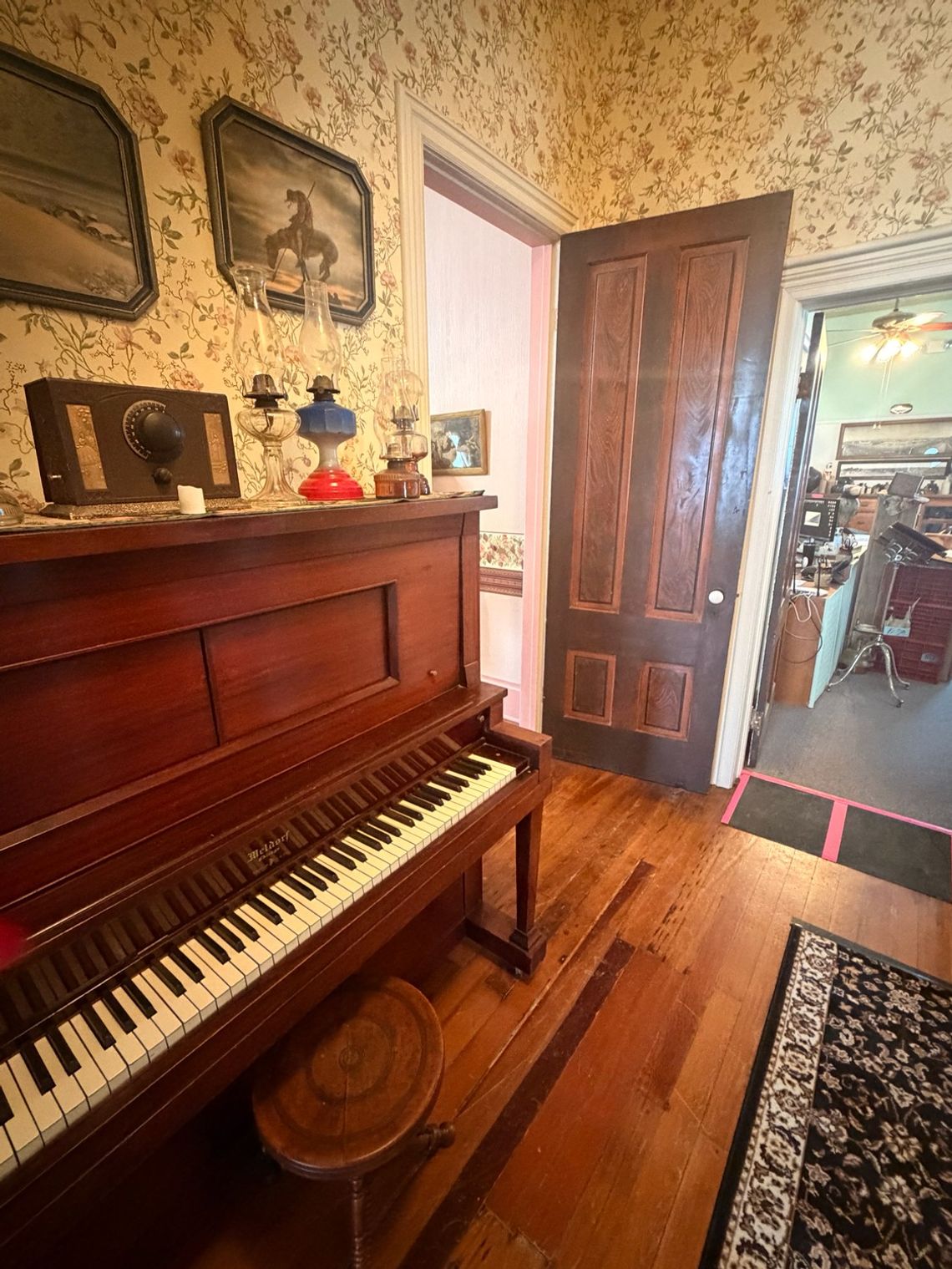
If you want to understand Lovelock, one good place to start is inside the old house that now serves as the Pershing County Museum.
Bonnie Skoglie, City Councilwoman and museum board member, along with Kathy Thompson, museum director, recently gave The Pershing Post a room-by-room tour of the Marzen House Museum, sharing not only the history of the home itself, but the stories, artifacts and personalities that now fill it.
The house was completed in 1875 and was originally built at Big Meadows Ranch by German immigrant Joseph Marzen, who came west after first arriving in New York as a teenager.
According to museum volunteers, Marzen later made his way through South America, Truckee and Virginia City before settling in Pershing County, where he purchased land and established the ranch.
The home remained part of the ranch for decades before eventually being moved to its present location in 1981. Skoglie explained that the house was transported in one piece using trucks and tractors, then placed on the museum grounds, where it became the centerpiece of the county’s historical collection.
Today, the museum gives visitors something more than display cases and labels. It feels like stepping into a lived-in piece of Lovelock’s history.
Much of that comes from the house itself. Thompson said many original features remain, including the floors, moldings and woodwork. In one upstairs bedroom, a period bed set believed to have belonged to the Marzen family still sits in place. The furniture, she said, was purchased in San Francisco and shipped by train.
Throughout the home, Thompson pointed out pieces that connect directly to Pershing County families, businesses and landmarks.
One wall features historic photographs showing how quickly Lovelock grew in the early 1900s.
Another room highlights some of the families who helped build the community.
There are reminders, too, of how much has changed. A photograph of downtown Lovelock from 1910 shows a very different streetscape than the one residents know today. Another image captures the schoolhouse that once stood where the courthouse now sits. That building, Skoglie said, was later moved and became what is now the Masonic lodge.
The museum also preserves pieces of local commerce and culture that many residents may not realize once existed here.
Thompson pointed to the old Lovelock Mercantile, now home to Nanny Joe’s, and said it was once the largest department store in Nevada when it was completed in 1909.
There is also a room devoted to Lovelock’s local identity, including early dairy items, family photographs and even memorabilia tied to the old Lovelock Music Company, a reminder that the community once had its own record label.
One of the most striking exhibits upstairs is the 40-Mile Desert room, where a handcrafted ox-drawn wagon now anchors the display. Skoglie said the wagon was built by Jeff Kearns and later donated to the museum after a raffle winner realized it was too large to keep at home.
Nearby are roping saddles, branding tools, and other ranching artifacts that help tell the story of work and survival in Pershing County.
Another display highlights the building of Rye Patch Dam, which Skoglie said was supported in part by local residents who furnished wagons, horses and supplies and were allowed to deduct those contributions from their taxes.
The upstairs military room is another standout. It includes uniforms, flags and personal items connected to local veterans, along with stories of the families who preserved them. Thompson said that room has become one of the museum’s most meaningful spaces.
And then there is the part of the museum that has become something of its own attraction: the ghost stories.
Thompson, who embraces that side of the museum with a mix of humor and conviction, pointed to rooms where she says visitors and investigators have reported unexplained activity over the years. She spoke of “Baby Girl,” a child spirit believed to be about 5 years old, and of other long-familiar presences that have become part of the museum’s lore.
Whether a visitor comes for the history, the architecture or the ghost tours, the larger point is the same: the museum is no longer just a crowded collection of old things. It has been carefully arranged to tell the story of Lovelock and Pershing County in a way people can actually see and feel.
What stands out most is not just the age of the house, but the care being taken to make the museum useful again, not as storage, but as a place where local history is being organized, interpreted and shared.
For anyone who has not walked through it lately, the Marzen House Museum is worth another look.
Next week: Outside the museum, Bonnie and Kathy shared more about the firehouse, equipment displays and the next phase of projects taking shape on the grounds.





Comment
Comments