

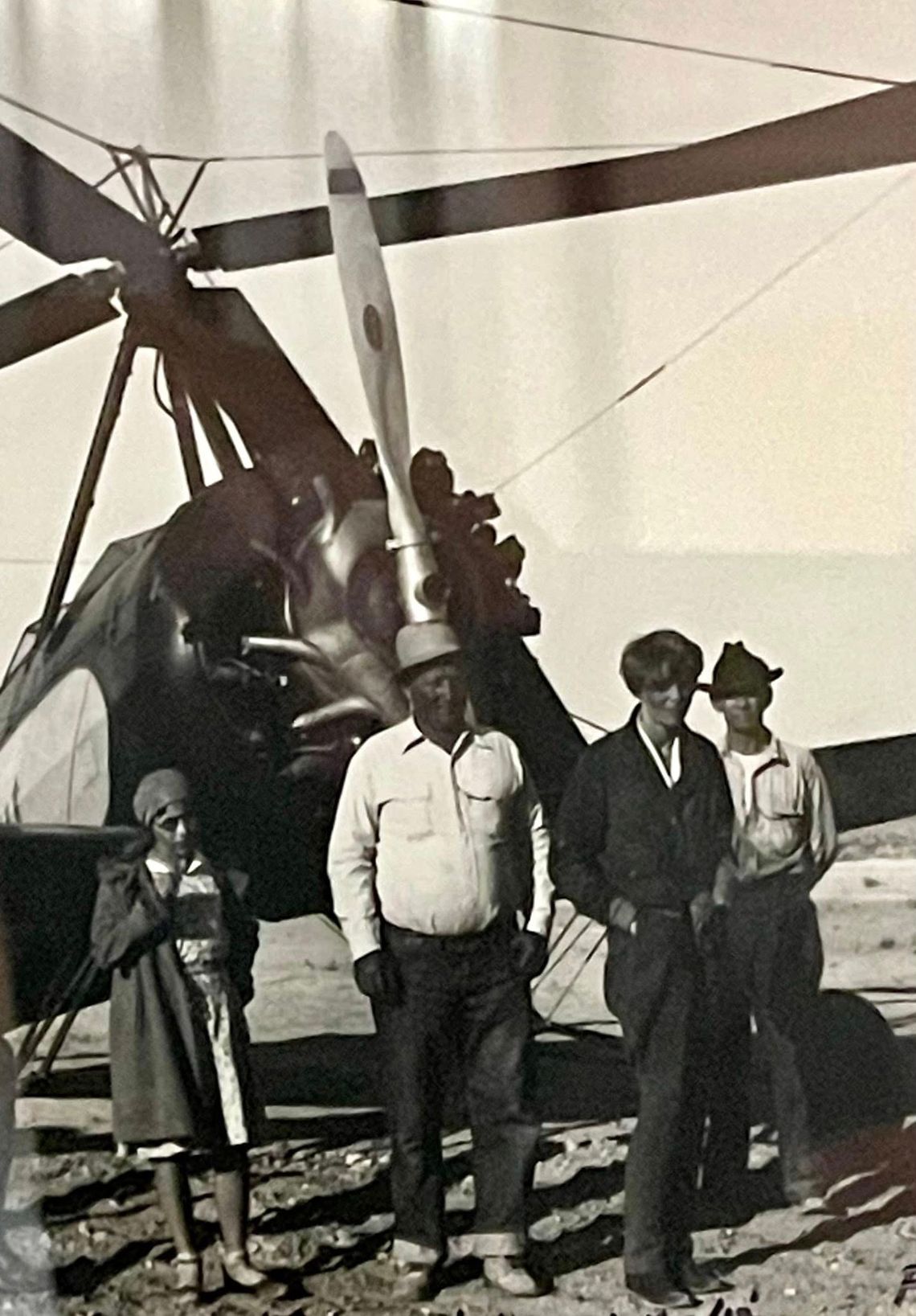
Long before her final, mysterious flight captured the world’s imagination, aviation pioneer Amelia Earhart made an unexpected stop near Lovelock during a cross-country journey in 1931.
Earhart was flying a Pitcairn autogiro, a forerunner to the modern helicopter when she encountered a severe dust and rainstorm while traveling from Battle Mountain toward Reno.
With limited fuel and worsening conditions, she was forced to make an emergency landing at a makeshift field near the Quicksilver and Montgomery mines, about 21 miles east of Lovelock.
The unusual aircraft, which Earhart called a “windmill ship,” could take off steeply and land almost straight down, but it carried only enough fuel for about two hours of flight. At the time of landing, it reportedly held just two gallons of gas.
Bob Anderson, a surveyor at the Quicksilver Mine, witnessed the landing and transported Earhart into Lovelock, where she spent the night at the Pershing Hotel while her mechanic remained with the aircraft.
Earhart departed early the next morning and continued on to Reno, greeted by a large crowd eager to meet the famed aviator. The Lovelock stop stands as a lesser-known chapter in her extensive flying career and a reminder that Nevada has played a significant role over the years in aviation history.
Photographs and additional details of Earhart’s Lovelock landing can be seen at the Marzen House Museum.







Comment
Comments