

A Salt Lake City-based geothermal energy company is preparing to begin exploratory drilling northeast of Lovelock as it evaluates whether underground heat resources could eventually support a commercial power plant.
Representatives of Zanskar Energy hosted a community open house Thursday evening at the Pershing County Community Center, where about two dozen residents gathered to learn about the proposed Colado geothermal project and ask questions about water use, permitting, jobs and the company’s long-term plans.
Ryan McGraw, Zanskar’s chief development officer, told attendees the company is still in the exploratory stage and must first confirm that the underground geothermal resource is large enough to support a power plant.
“We’re confident there is a geothermal system here,” McGraw said. “We need to go explore and discover where the actual heart of this resource is.”
The project area is northeast of Lovelock, across Interstate 80 from the U.S. Silica plant and north of the Lovelock Correctional Center.
Zanskar has acquired approximately 3,500 acres of Bureau of Land Management geothermal leases and is working with private landowners on about 1,000 additional acres.
The company acquired the federal leases from Ormat Technologies earlier this year after Ormat completed exploratory work in the area.
Angela Isaacs, Zanskar’s senior exploration geologist, said the company has already completed shallow temperature testing and geophysical surveys to identify underground fractures where naturally heated water may be circulating. The next step is drilling two exploratory wells expected to reach depths of 4,000 to 7,000 feet. The initial drilling campaign is expected to last about 45 days.
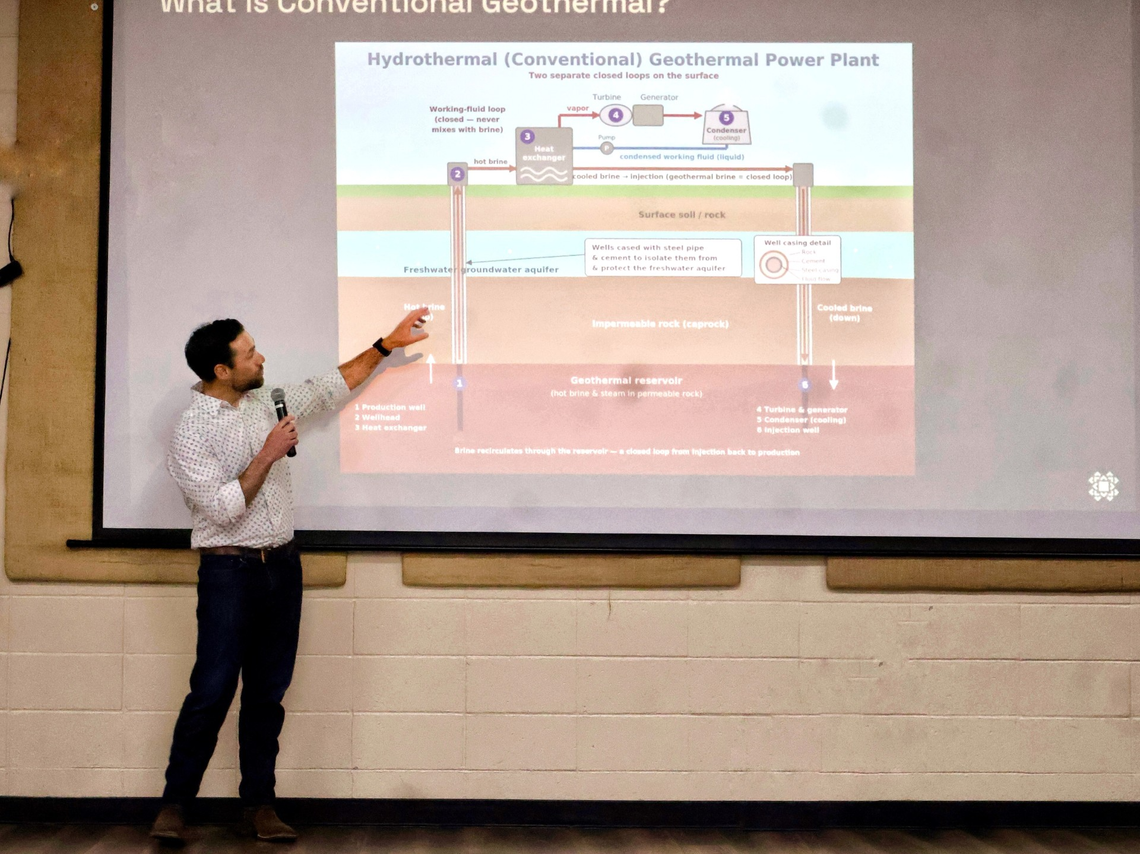
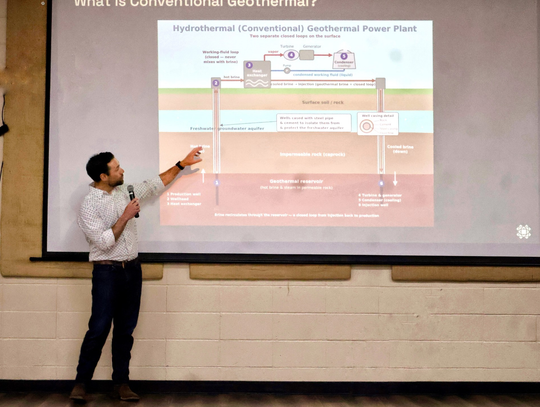
The plant would bring naturally heated, salty water (brine) from deep underground to the surface. Its heat would warm a separate fluid that powers a turbine to generate electricity, while the geothermal water would be returned to the same underground reservoir to be reheated naturally and reused.
If the exploratory wells are successful, Zanskar would return to drill larger production wells and conduct a commercial flow test lasting up to 90 days before deciding whether to pursue construction.
Water use generated the most discussion during the question-and-answer session, with one resident expressing concern about irrigation supplies for local farmers.
McGraw said exploratory drilling could require approximately 60 acre-feet of water over a period of 30 to 60 days. The company is considering purchasing construction water from Lovelock Meadows Water District or temporarily leasing existing water rights. Once drilling reaches the geothermal reservoir, he said, geothermal brine could be used for the remainder of the drilling process.
Wesley Adams, Zanskar’s director of land and permitting, said any changes in water use would require approval from the Nevada Division of Water Resources. He added that an operating geothermal plant would use very little fresh water beyond normal maintenance needs.
Company representatives also emphasized that geothermal wells are lined with steel casing and cement through freshwater aquifers and are regulated by multiple state and federal agencies. Monitoring wells would also be installed to ensure geothermal fluids remain isolated from groundwater.
Residents also asked about jobs. McGraw said exploration work would create relatively few local positions, but construction could employ as many as 200 workers, including electricians, welders and other skilled trades, with the company intending to hire locally whenever possible.
Once the plant is operating, employment would be much smaller. McGraw said Zanskar’s 15-megawatt Lightning Dock geothermal plant in New Mexico employs eight full-time workers. He estimated the Lovelock-area project could ultimately produce around 75 megawatts if exploration confirms expectations, although he stressed that figure remains preliminary.
Even at that size, he said, the facility would have a relatively small footprint. A 15-megawatt plant occupies about 4.5 acres, while a 100-megawatt facility would require roughly 10 acres.
Although some residents have associated the project with data centers, Zanskar is not proposing to build a data center in Pershing County. The company develops geothermal energy projects that sell electricity to utilities and other large power purchasers including data centers.
According to Zanskar, its customers and partners include utilities such as NV Energy, community power agencies and other organizations seeking around-the-clock carbon-free electricity.
If exploration proves successful, Zanskar plans to return for additional public meetings before submitting county permit applications. The permitting process would include detailed engineering plans, emergency response planning and additional opportunities for public comment.
McGraw said the company hopes to begin construction around 2028 and have the plant operating by 2030. However, permitting, equipment availability and transmission connection approvals could push that timeline back by a year or two.
“Our goal is to be that long-term owner as well,” McGraw said. “We want to be here for decades to come.”





Comment
Comments