
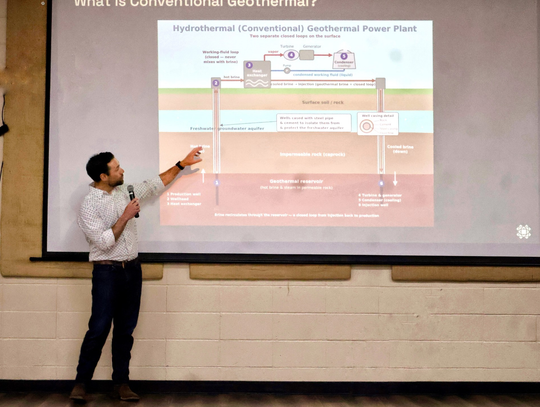
As industries evolve across Nevada, few topics generated as much discussion at this year’s Western Nevada Development District summit as the rapid growth of data centers.
Once considered a niche part of the tech world, data centers are now at the center of conversations about economic development, infrastructure, and long-term planning, particularly in northern Nevada, where the region is emerging as a key player in the industry.
Panelists described data centers as critical infrastructure powering everything from cloud computing to artificial intelligence, with demand continuing to grow at a rapid pace.
“Data centers are a really important part of this conversation,” said Tatjana Vukovic, deputy director of the Northern Nevada Development Authority. She noted that these data center companies can bring significant economic benefits, but they also raise certain concerns.
Those concerns, speakers explained, largely come down to resources.
“There’s a lot of different kinds of data centers,” said Justin Brandon of Quanta Services. “What all data centers require really is fiber-optic internet, power, water, staff, and land [with the right] permitting and zoning.”
The rise of artificial intelligence has further accelerated demand. Newer AI-focused data centers rely on specialized hardware and computing systems that require even greater energy capacity, pushing utilities and communities to plan for increased load.
While the scale varies depending on the type of facility, even a single large data center can place substantial demands on local infrastructure.
Some of those demands, however, particularly those related to water use, are often shaped by misconceptions. Summit speakers worked to unravel some of the more commonly misperceived ideas.
While large facilities can require significant water for cooling, many modern data centers use closed-loop systems that recycle water rather than continuously drawing from fresh supplies.
“You’re filling [the cooling system] at first, but you’re losing less than 10% [of that water] a year,” noted Raymond Zavalla, a panelist from Helix Electric in Reno, adding that most facilities in Nevada are designed to minimize long-term water consumption.
From an economic standpoint, data centers present both opportunities and limitations.
Large-scale facilities can bring investment and tax revenue, and in some cases hundreds of jobs. But compared to other industries, they often require fewer permanent employees once operational.
Panelists noted that different types of data centers can have varying impacts. Large “hyperscale” facilities operated by major companies may drive major infrastructure investment, while smaller “colocation” centers can support local businesses by providing access to technology without requiring major upfront costs.
For rural communities, those smaller facilities may offer a more accessible entry point into the industry.
Still, competition to attract data centers remains strong, and Nevada is not the only region vying for growth. That reality underscores the importance of planning and partnerships, a recurring theme throughout the summit.
Economic development officials emphasized that attracting data centers requires coordination between local governments, utility providers, and private developers. Decisions about land use, zoning, infrastructure, and incentives all play a role in determining whether a project moves forward.
Panelists also pointed to the importance of evaluating projects carefully to ensure they align with community goals and available resources.
“There are no winners and losers,” Brandon said, referring to potential partnerships between public agencies and private developers. “Everybody can win in this scenario.”
As northern Nevada continues to grow, data centers are expected to remain a key part of the conversation, bringing with them both promise and complexity.
Next week: Energy demand, infrastructure and whether Nevada can keep pace with rapid growth.







Comment
Comments