

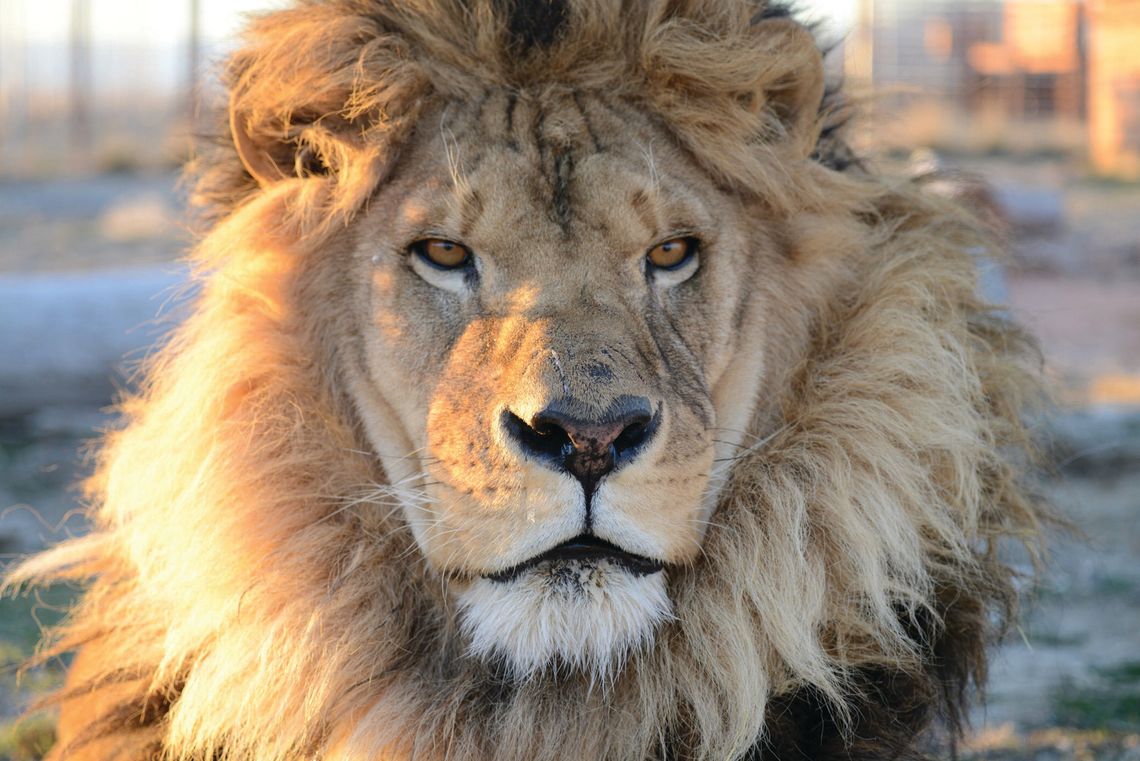
The Safe Haven Wildlife Sanctuary is mourning the loss of Tangassi, a longtime resident African lion whose story spanned years of rescue, companionship and care in northern Nevada.
Sanctuary staff announced earlier this week that Tangassi was euthanized after a decline caused by renal failure. According to Safe Haven, his condition had recently worsened, and despite ongoing efforts to encourage him to eat, including administering anti-nausea medication and offering favorite foods, he gradually lost interest in food and interaction.
“In the end, we realized we were out of options, and it was time to let him go,” the sanctuary shared. Tangassi was euthanized in his habitat by veterinarian Dr. Estill, surrounded by staff.
Tangassi first arrived at Safe Haven in 2019 after being displaced from a California facility that closed, leaving hundreds of animals in need of placement. Born and raised in captivity for the entertainment industry, he was among the animals relocated as part of a large-scale rehoming effort.
At Safe Haven, Tangassi quickly became more than just another rescued animal. Staff initially brought him in as a potential companion for Mona, a resident lioness who had lost her longtime partner. Over time, the two formed a bond, spending time together and offering one another companionship in a setting designed to mimic the social structure lions would experience in the wild.
That companionship became especially meaningful in Mona’s final days, when staff observed the pair nuzzling along the fence line as her health declined.
After Mona’s death in 2021, Tangassi remained a central presence at the sanctuary. He was later paired with another lion, Rose, continuing the sanctuary’s efforts to provide social enrichment for animals that cannot return to the wild.
Known for his strong personality, Tangassi was described as playful and interactive with staff. He frequently responded to caregivers’ presence and engaged with enrichment.
In recent weeks, however, staff noticed changes. As his health declined, Tangassi became less active, no longer approaching staff as he once had and spending more time resting in his habitat.
“His condition continued to worsen, and we realized we were out of options, and it was time to let him go,” they said in a post.
The sanctuary expressed gratitude to those who supported Tangassi throughout his life and said donations in his memory will help offset veterinary expenses and continue care for other resident animals.






Comment
Comments